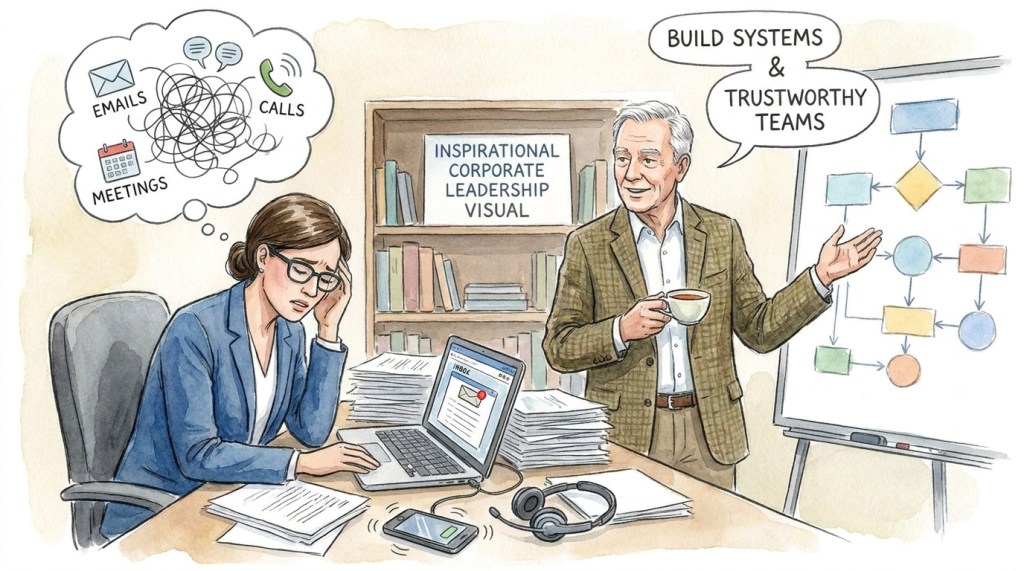
There is a dangerous trap many people with vision fall into. It usually starts with passion.
You care deeply. You want things done properly. You want excellence. You want to help people. And because of that, you slowly begin to carry everything alone. At first, it feels noble. Then it becomes exhausting.
Exodus 18 gives one of the most practical leadership lessons in Scripture, and it has little to do with miracles. It is about structure, sustainability, delegation, and mental wellbeing.
Moses had successfully led an entire nation out of Egypt. He had witnessed miracles, crossed the Red Sea, and seen God provide in impossible ways. But despite all of that, he was quietly heading toward burnout.
The Silent Pressure of Carrying Everything
The Bible says Moses sat from morning until evening settling disputes among the people. Imagine the pressure:
– Everyone needed him
– Everyone depended on him
– Every issue came to him
– Every decision rested on him
To many people, this would look like importance. But Jethro saw something different. He saw exhaustion.
One of the most powerful statements in the chapter is when Jethro tells Moses: “What you’re doing is not good.” Not evil. Not sinful. Just unsustainable. Many leaders today are not failing because they lack vision. They are failing because they are trying to carry the vision alone.
The Mistake Many Visionaries Make
A lot of us secretly believe: “If I don’t do it myself, it won’t be done properly.” So we:
– Overwork ourselves
– Micromanage people
– Refuse to delegate
– Become emotionally drained
– Carry responsibilities we were never meant to carry alone
The result? Eventually both the leader and the people suffer.
Jethro told Moses: “You and these people who come to you will only wear yourselves out.”
That statement is still relevant today. Burnout is real. Mental exhaustion is real. Emotional fatigue is real. And sometimes the problem is not lack of prayer. Sometimes the problem is lack of structure.
Vision Without Structure Creates Chaos
One thing this chapter teaches clearly is this: A vision needs systems. Passion alone is not enough.
You can have:
– A thriving business idea
– A growing ministry
– A strong community
– A meaningful project
But without structure, eventually everything becomes overwhelming.
Growth without systems creates confusion
This is why many organizations struggle:
– Too much dependency on one person
– No delegation
– Poor leadership structure
– Emotional decision-making
– Wrong people in the wrong roles
Jethro introduced Moses to something powerful: distribution of responsibility.
Not everything needed Moses personally.
Choose Capable People, Not Just Familiar People
This may be one of the most important leadership principles in the entire chapter. Jethro did not say:
– Choose your friends
– Choose people you pity
– Choose family members automatically
– Choose whoever is available
He said: “Choose capable men… trustworthy men… men who hate dishonest gain.”
That means leadership selection should be based on:
– Character
– Integrity
– Competence
– Capacity
Many visions collapse because people place loyalty above capability. Sometimes we appoint people emotionally instead of wisely. Being close to someone does not automatically mean they are equipped to lead. A healthy structure requires the right people in the right places.
Delegation Is Not Weakness
Some leaders struggle to release responsibility because they think delegation means loss of control. But Exodus 18 shows the opposite. Delegation is wisdom.
Delegation:
– Protects your energy
– Develops other people
– Creates sustainability
– Prevents burnout
– Strengthens the vision
Moses was still the leader. He simply stopped trying to personally carry every burden.
That lesson applies everywhere:
– Leadership
– Parenting
– Business
– Ministry
– Community building
– Creative work
You do not have to do everything yourself to prove you are committed.
Protecting Mental and Emotional Wellbeing
One of the deepest parts of this chapter is how practical Jethro’s advice was. He understood something many people ignore: A constantly exhausted person cannot lead effectively. When people are mentally overwhelmed, they become:
– Irritable
– Emotionally reactive
– Mentally foggy
– Unfocused
– Unproductive
Sometimes we glorify overworking. We call it sacrifice. We call it dedication.
But some exhaustion is not spiritual. It is structural.
Even Jesus rested. Even Moses needed help. No one was designed to carry endless pressure alone.
The Humility to Receive Wisdom
Another overlooked lesson in this chapter is Moses’ humility.
Moses could have responded with pride: “God speaks to me.” “Who are you to advise me?” “You don’t understand the assignment.” Instead, he listened. That takes maturity.
One of the fastest ways to destroy a vision is refusing wise counsel. Strong leaders are not those who know everything. Strong leaders are those who are teachable.
Lessons We Can Apply Today
1. Stop trying to carry everything alone – You are human. You have limits. Trying to carry every burden yourself will eventually drain you.
2. Build systems early – Don’t wait until things become chaotic before introducing structure. Healthy systems create healthy growth.
3. Choose people wisely – Not everyone who is loyal is capable. And not everyone capable has integrity. You need both.
4. Delegation is necessary for growth – If everything depends on you personally, growth will eventually stop.
5. Protect your mental wellbeing – Rest is not laziness. Boundaries are not weakness. Healthy leadership requires emotional and mental stability.
6. Be willing to receive advice – Sometimes the wisdom you need will come through people around you. Humility keeps growth alive.
Finally, Exodus 18 reminds us that vision alone is not enough. You can be called. You can be gifted. You can be passionate. And still become overwhelmed if you refuse structure. Moses had the vision. Jethro helped him build the framework.
Many people today do not need more passion. They need:
– order
– support
– trusted people
– systems
– and sustainable leadership
A great vision should not destroy the visionary. It should be built in a way that allows both the work and the person carrying it to thrive.

Leave a comment